

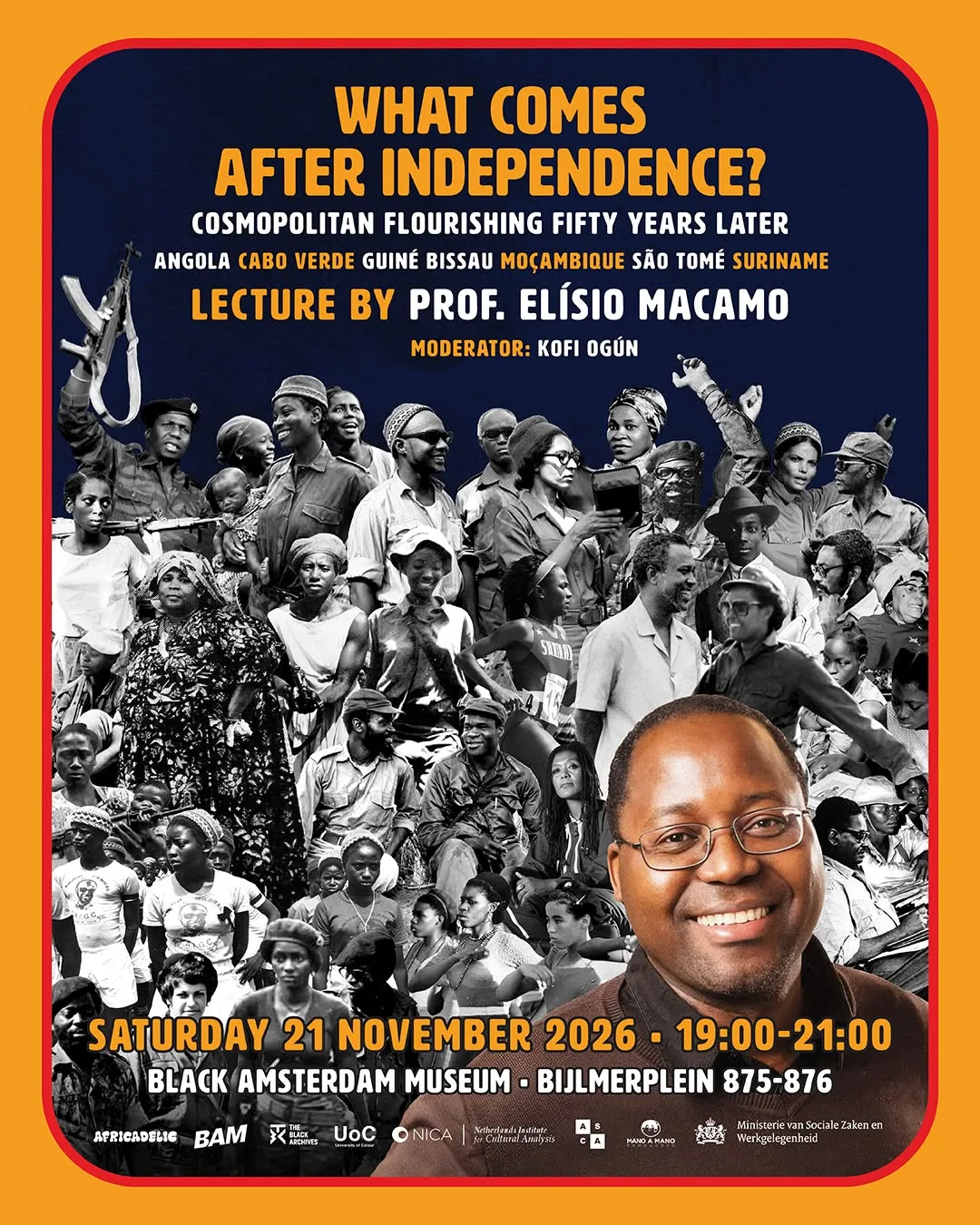
𝗪𝗵𝗮𝘁 𝗖𝗼𝗺𝗲𝘀 𝗔𝗳𝘁𝗲𝗿 𝗜𝗻𝗱𝗲𝗽𝗲𝗻𝗱𝗲𝗻𝗰𝗲? 𝗖𝗼𝘀𝗺𝗼𝗽𝗼𝗹𝗶𝘁𝗮𝗻 𝗙𝗹𝗼𝘂𝗿𝗶𝘀𝗵𝗶𝗻𝗴 𝗙𝗶𝗳𝘁𝘆 𝗬𝗲𝗮𝗿𝘀 𝗟𝗮𝘁𝗲𝗿' by 𝗘𝗹𝗶𝘀𝗶𝗼 𝗠𝗮𝗰𝗮𝗺𝗼
𝗔𝗯𝗼𝘂𝘁 𝘁𝗵𝗲 𝗹𝗲𝗰𝘁𝘂𝗿𝗲
This lecture proposes that independence should be understood not only as an event that happened in former colonies but also as an unfinished transformation of relationships. Political sovereignty changed African countries and Suriname profoundly. But what did the independence of the colonised require of the societies that had colonised them? What, if anything, became independent in Europe?
Gloria Wekker’s White Innocence provides an important point of departure. Her analysis of the Dutch 'cultural archive' shows how colonial histories can remain deeply present in institutions, habits and ways of seeing while simultaneously being treated as external to contemporary national identity. This produces an intriguing asymmetry, as former colonies are repeatedly invited to explain themselves through colonialism, while former colonial powers can imagine colonialism as a chapter that has already ended.
Yet, recognising the persistence of the colonial past cannot be the endpoint of decolonisation. If independence transformed the political terms on which formerly colonised peoples could relate to the world, it also created the possibility – and the necessity – of asking what kinds of relationships should replace those structured by empire.
This is where the idea of cosmopolitan flourishing becomes useful. It shifts our attention from the question of how we overcome a shared but unequal past to the question of how people with different histories, memories and experiences might build the conditions for flourishing together without requiring sameness, innocence or forgetting.
Cosmopolitan flourishing does not mean reconciliation without accountability, nor does it require former colonies and former colonial powers to inhabit the same historical narrative. It begins from the premise that we already inhabit a common world, but we do so from unequal historical positions. The political and ethical challenge is therefore not simply to recognise difference or acknowledge historical injustice, but to create relationships in which difference does not determine whose experience counts, whose knowledge travels, whose suffering requires explanation, or whose future can be imagined as universal.
To celebrate independence in the Netherlands, therefore, creates an opportunity to reverse, and then extend, the direction of the question. Instead of asking only what Angola, Mozambique, Cape Verde, Guinea-Bissau, São Tomé and Príncipe, or Suriname have made of their independence, we might ask what their independence means for the societies from which they became independent. And beyond that: what would it mean, after independence, to learn how to flourish together without denying the histories that made our present unequal? The lecture does not propose fifty years of independence as a simple story of fulfilment or disappointment. Independence created the political possibility of responsibility, i.e., the possibility for societies to argue about their futures in their own name. Fifty years later, celebration can therefore be more than commemoration. It can become an opportunity to ask what kinds of relationships independence has made possible, and which ones we have still failed to imagine.
Celebrating independence here, in the Netherlands, may ultimately mean recognising that decolonisation was never something that only other countries had to accomplish.
Fifty yearslater, the unfinished task may be to move from the end of colonial rule towards the creation of a world in which living together can mean flourishing together.
About Elísio Macamo
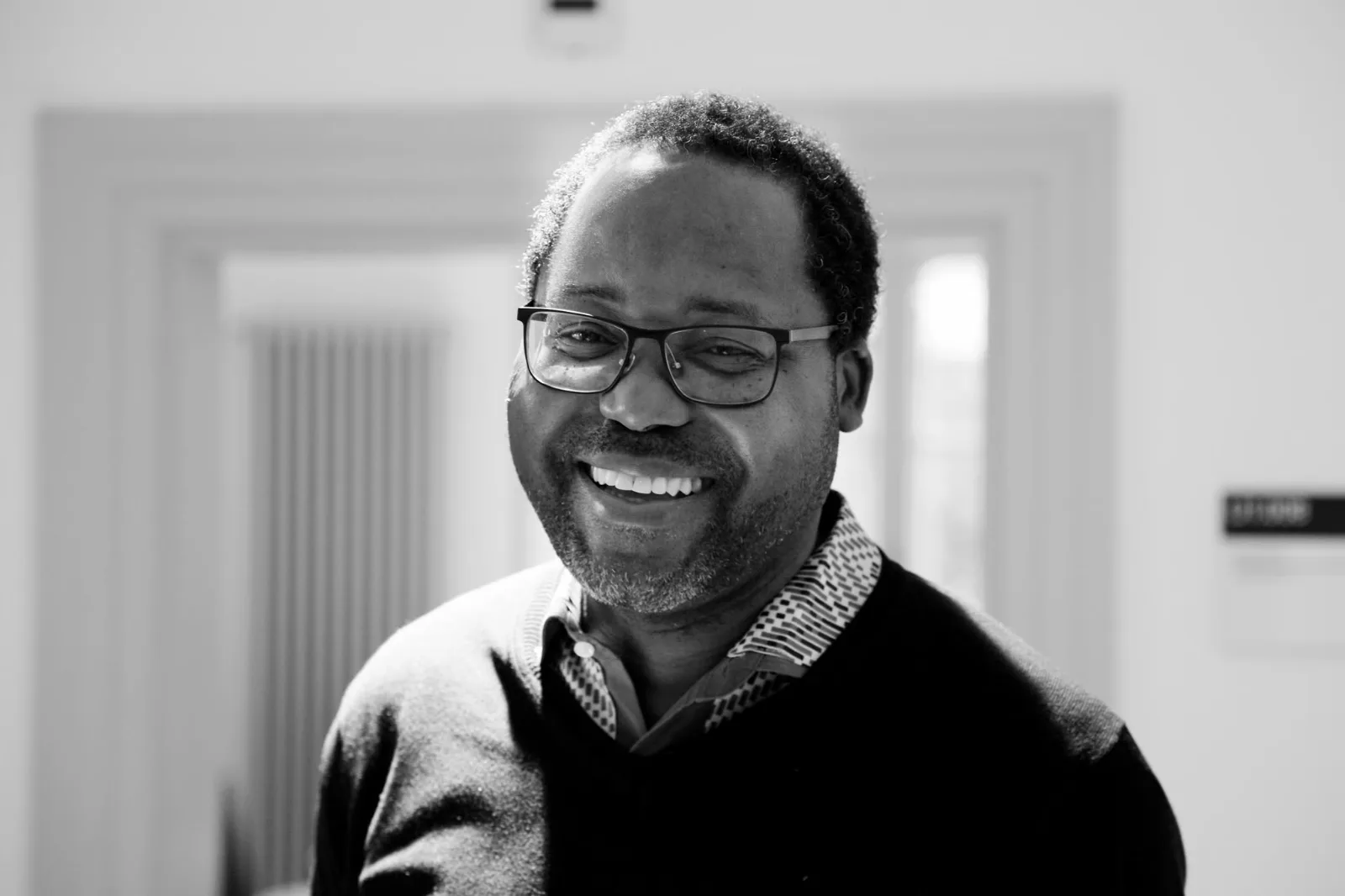
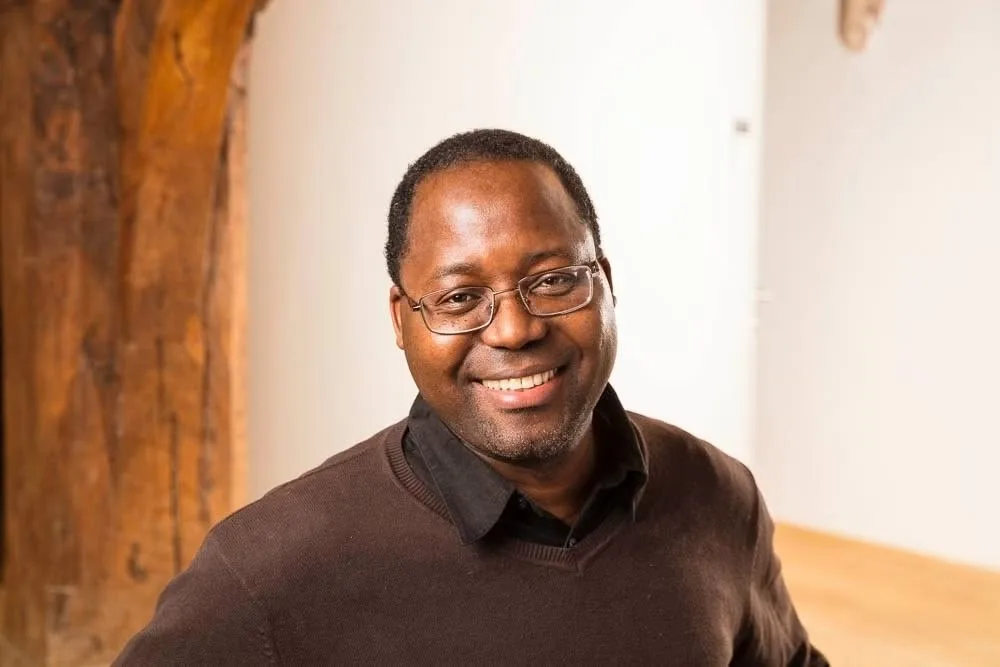
Elísio Macamo is Professor of Sociology with a focus on Africa at the University of Basel (since October 2009). He previously taught development sociology at the University of Bayreuth, where he was a founding member of the Bayreuth International Graduate School of African Studies. He was born and grew up in Moçambique. He studied in Maputo (Mozambique), Salford and London (England) and Bayreuth (Germany). He holds a Masters in Translation and Interpreting (Salford), a Masters in Sociology and Social Policy (University of North London) and a PhD and Habilitation in General Sociology (Bayreuth). He was Post-Doctoral Fellow in Bayreuth, Research Fellow at the Center for African Studies in Lisbon (Portugal), AGORA-Fellow at the Wissenschaftskolleg zu Berlin and visiting lecturer at the Eduardo Mondlane University in Miçambique. For CODESRIA (Council for the Development of Social Science Research in Africa, Dakar, Senegal) he regularly offers methodological workshops for Lusophone African doctoral students.
About Elísio Macamo
Elísio Macamo is Professor of Sociology with a focus on Africa at the University of Basel (since October 2009). He previously taught development sociology at the University of Bayreuth, where he was a founding member of the Bayreuth International Graduate School of African Studies. He was born and grew up in Moçambique.
He studied in Maputo (Mozambique), Salford and London (England) and Bayreuth (Germany). He holds a Masters in Translation and Interpreting (Salford), a Masters in Sociology and Social Policy (University of North London) and a PhD and Habilitation in General Sociology (Bayreuth). He was Post-Doctoral Fellow in Bayreuth, Research Fellow at the Center for African Studies in Lisbon (Portugal), AGORA-Fellow at the Wissenschaftskolleg zu Berlin and visiting lecturer at the Eduardo Mondlane University in Miçambique. For CODESRIA (Council for the Development of Social Science Research in Africa, Dakar, Senegal) he regularly offers methodological workshops for Lusophone African doctoral students.
Meer nieuws
Abuja Afrojazz Festival brengt artiesten uit Nigeria, Benin en Togo samen
Het Abuja Afrojazz Festival is een uniek evenement dat artiesten uit Nigeria, Benin en Togo samenbrengt voor een gezamenlijk…
AFRO DRIP DANCE CAMP 2026 | NOV 20 to 21 to 22
Afro Drip Dance Camp brengt Afrikaanse dansculturen en diaspora samen in Amsterdam
Global Sounds Amsterdam 2 brengt internationale muziekculturen samen bij een
Amsterdam maakt zich op voor een nieuwe editie van Global Sounds Amsterdam. Op zaterdag 28 november 2026 verandert Q-Factory – XL Band…
Nieuwe kansen voor Nigeriaanse vrouwen in het bedrijfsleven dankzij ECOWAS
De Economische Gemeenschap van West-Afrikaanse Staten (ECOWAS) lanceert een regionaal programma om deelname van vrouwen aan de groene…
Ugandese traditionele leiders bezoeken Addis Ababa
Een delegatie van Ugandese traditionele leiders heeft de ambassade van Uganda in Addis Ababa bezocht om de Ugandese cultuur te promoten.
Gospelfestival ‘Hoop is NU’ brengt Nederlandse en Surinaamse topartiesten samen
Het Gospelfestival ‘Hoop is NU’ combineert livemuziek met inspirerende boodschappen en richt zich op mensen die normaal gesproken niet…


